‘Wait three to six months’: New city initiative in the works to fast-track Edmonton infill
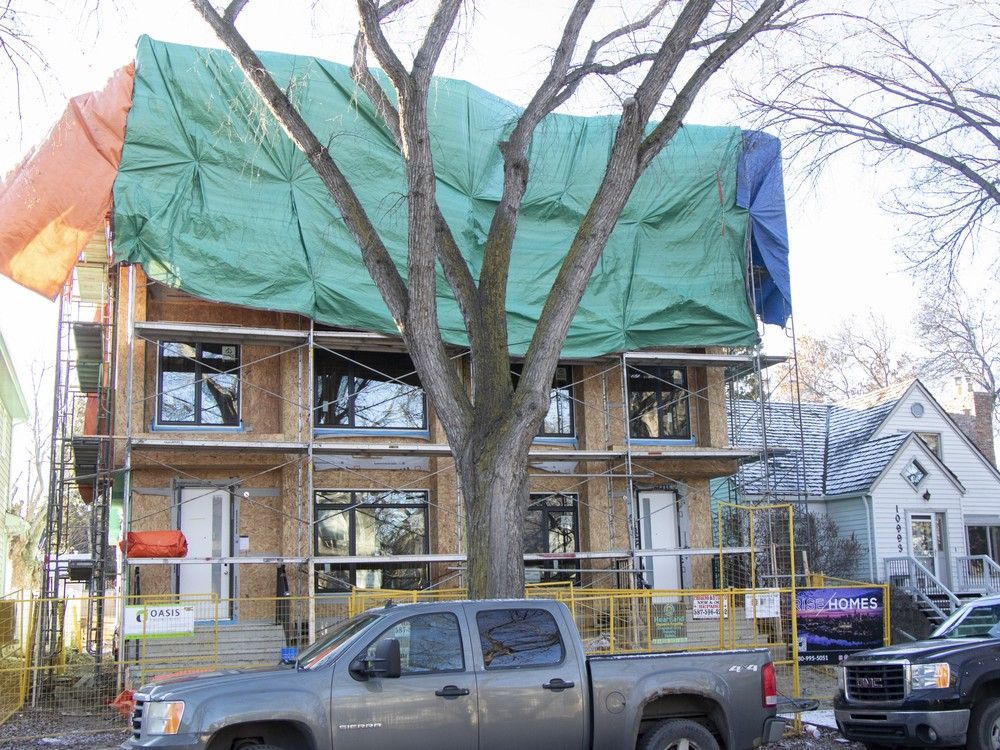
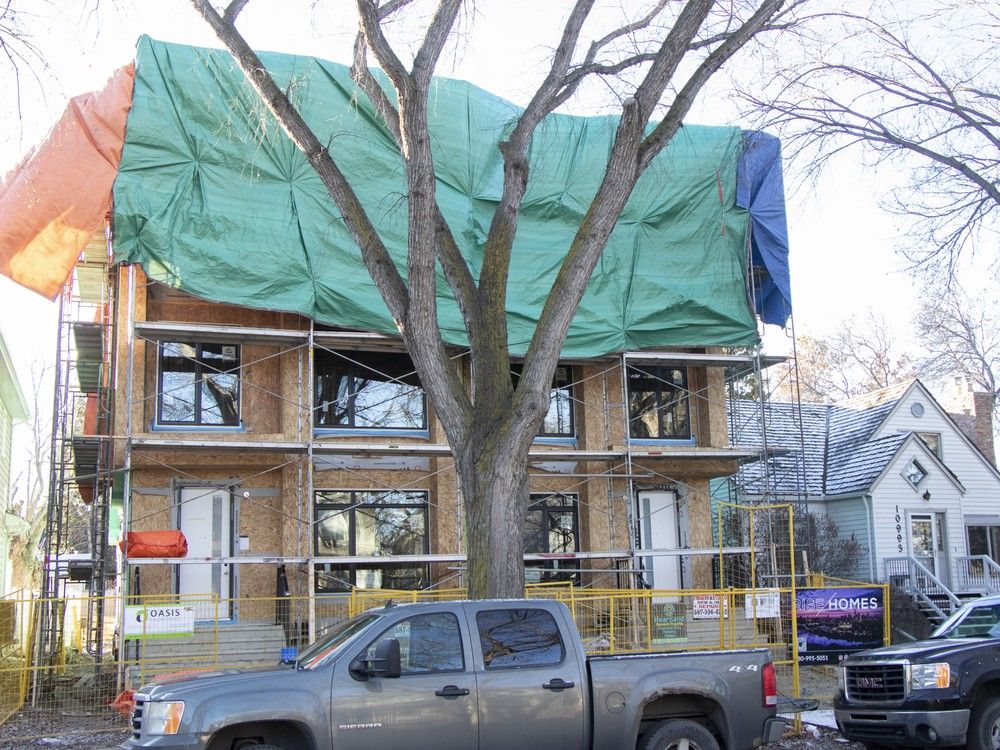
Edmonton’s City Plan calls for a future where half of the new builds are infill projects. To that end, the city is looking at ways infill projects can be approved more quickly.
The government doublespeak name for this is the “standardized design initiative.” But the plan is for the city to have 12 pre-approved ready-to-build designs on hand, so developers and builders can get their infill projects quickly greenlighted.
“Based on what I heard, I am for this plan,” said Mauricio Ochoa, who owns FCX Developments and is the president of the Infill Development in Edmonton Association (IDEA). “Sometimes we can wait three to six months for approval. It would be very positive if we could get in a couple of weeks.”
Go to the City of Edmonton website, look for “housing” and then you will find the
. The plan is for the city to create a fast-track approval process. Pick a design from the catalogue, build it and they will come.
Tenchoe Dorjee, the implementation lead of the city’s housing action team, spoke about the initiative at IDEA’s symposium Thursday at the Matrix Hotel. Dorjee said the plan is for the city to have a dozen designs on hand, seven of them Edmonton-specific.
Currently, there are
seven Alberta-specific designs
listed by the Canada Mortgage and Housing Corporation, ranging from a laneway home of just 784 square feet to a 5,296-square-foot six-plex.
Dorjee said the city has just undergone a consultation process on the plan, but needs to move quickly so builders can take advantage of the federal government’s Housing Accelerator Fund.
Anger fizzled at election time
Infill has been a contentious issue in Edmonton over the past several months. In the summer, city council approved a series of architectural controls over infill projects. They included a reduction of allowed side entrances, the need for a multiplex to have a clear front-facing facade, and a frontal wall that features at least 15 per cent coverage by windows. Mid-block infill developments were capped at 25 metres in length, or half of lots less than 50 metres wide.
But city council decided by a 6-5 vote not to limit mid-block infill projects to six units or less, a move which had been proposed by Coun. Michael Janz and was supported by current Mayor Andrew Knack. A further study on the impact of eightplexes is expected in 2026.
The city’s new zoning bylaw allowed for automatic approvals of multiplex infill projects, and groups such as Edmonton Neighbourhoods United were formed to
ahead of the October election. Groups in Crestwood and Glenora formed to
sign onto restrictive covenants
, where landowners would agree to place provisions on their land titles that would restrict anyone from building higher density projects.
But, come election time, voters elected eight of nine incumbents who were in the race. Voter participation was low, near 30 per cent. Former councillor, Knack, won the mayoral race. And this held true — while neighbourhoods like Crestwood and Glenora were against eightplexes, there aren’t a lot of votes in places that don’t have population density. City statistics show that the number of people 18 and over in Glenora is less than 3,000. So, Glenora residents may be angry, but the neighbourhood’s lack of density makes it politically toothless come election time.
Dorjee told conference goers that there are “valid concerns” from neighbours when it comes to infill, and that the city must approach the problem “with empathy.” But she said that infill is necessary for Edmonton to meet its housing needs.
“We’re fighting the notion that the missing middle doesn’t belong in my neighbourhood,” she said.
And she said that the idea of what gives a neighbourhood its character comes from the who, not the what.
“Neighbourhoods aren’t just made of the buildings that are there, but the people who live there.”
She said that the city is still looking at potential designs, to make sure that it can “remove cookie-cutter as much as we can.” There will be some room for builders to add custom touches to the shelf designs.
Ochoa said he will wait to see if the city can prove itself.
“The city needs to do a good job with their designs,” he said.
He said the city must focus on the fact that most infill projects are aimed at renters.
“We don’t want them to be overdesigned, which will cost renters,” he said.
Ochoa wants to see a focus on livability and flexible spaces, not on bells and whistles. He said the projects need to be attractive and match the characters of the neighbourhoods in which they’ll be built. But he said the city needs to “find a balance” between that and the value that renters expect.
Related
Bookmark our website and support our journalism:
Don’t miss the news you need to know — add
EdmontonJournal.com
and
EdmontonSun.com
to your bookmarks and
sign up for our newsletters
.
You can also support our journalism by becoming a digital subscriber. Subscribers gain unlimited access to The Edmonton Journal, Edmonton Sun, National Post, and 13 other Canadian news sites.
The Edmonton Journal
|
The Edmonton Sun
Search Articles
Recent Posts
Stay Updated
Get the latest articles delivered to your inbox.