Toys ‘R’ Us Canada closes at least 38 stores this year, puts another 12 up for sale
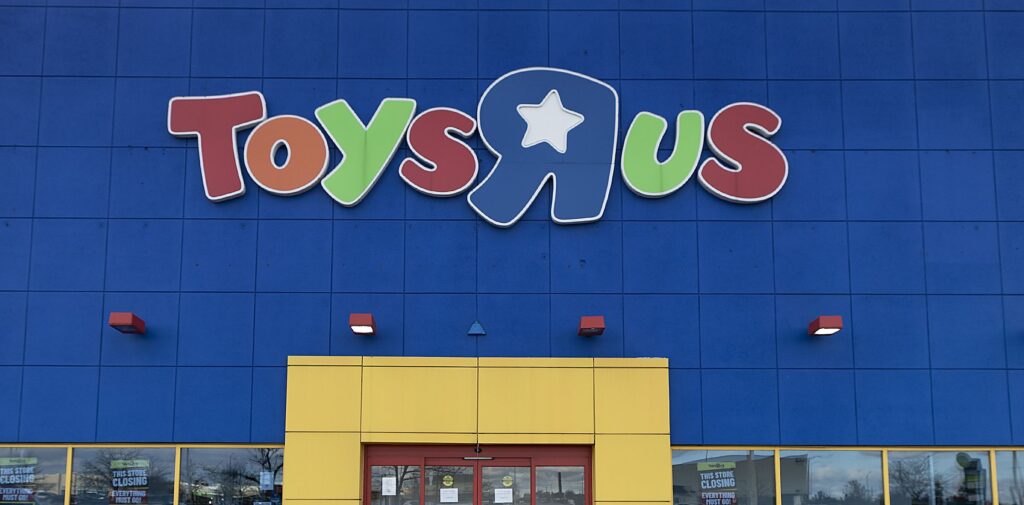
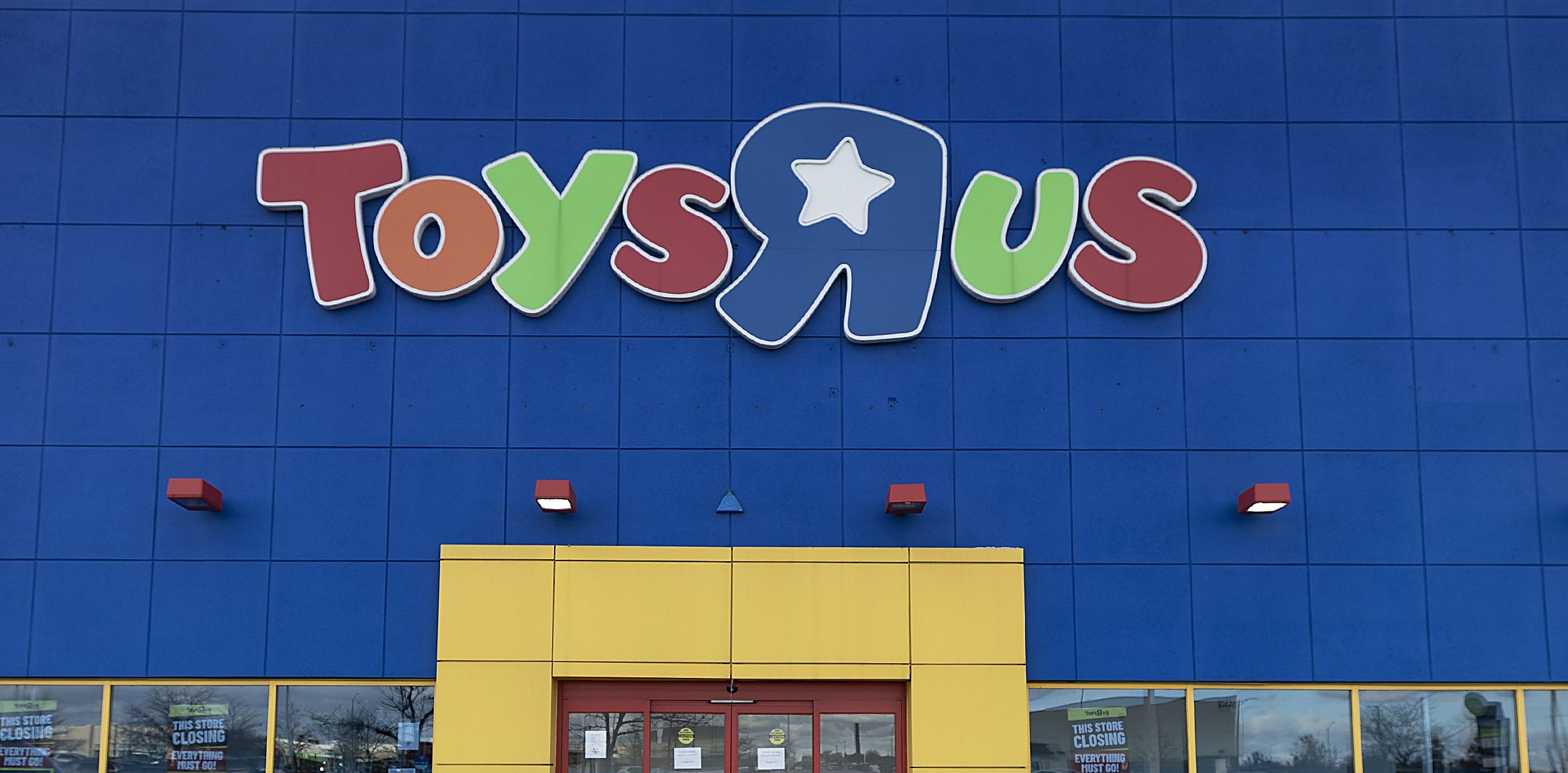
A toy empire that has dominated Canada’s retail landscape for decades appears to be shrinking, with a new analysis showing Toys “R” Us now operates fewer than half of the locations it ran just four years ago — and even more are up for sale.
The national chain, a landmark for generations of children, once had a
of 103 stores across the country after billionaire Doug Putman bought and expanded the Canadian operations. But dozens of locations have closed this year alone, leaving just 40 stores remaining, with 12 of them looking for new owners, according to research by the Edmonton Journal and Financial Post.
Putman did not respond to requests for comment, nor did he offer any explanation as to why the brand’s footprint is shrinking so dramatically. The downsizing comes amid external pressures, such as the growing dominance of retail giants Walmart Inc. and Amazon.com Inc., and a recent bankruptcy at his own family’s company, Everest Toys.
The seeming retreat was not part of Putman’s plans when he took over the chain during the depths of the pandemic in 2021 — he had ambitions for growth.
“I would like to think that five, 10 years from now, we’ve got an awful lot of stores in the U.S. as well, and potentially maybe in other countries,” Putman said on the
a couple of months after the takeover. “Toys work everywhere.”
Five years later, there are signs of strain.
Working with the Financial Post, the Edmonton Journal assembled a database of Toys “R” Us stores, and cross-referenced locations listed on the retailer’s website with commercial real estate listings across Canada. Seven properties are on the market for a total of nearly $121 million, while another five locations are selling without disclosed asking prices, meaning the total value of the company’s real estate listings is likely tens of millions more. An additional site, a store in Barrie, Ont., is available for lease.
The reporting team also scoured media archives and contacted provincial government agencies across the country, looking for evidence of store closures. It found that at least 38 Toys “R” Us locations have shut this year alone.
The site of the company’s one-time corporate headquarters in Vaughan, Ont., also appears to be vacant. The property at 2777 Langstaff Rd.
, according to the real estate firm Pure Industrial. Ontario’s labour ministry said it was notified of the head office closure and had activated its rapid re-employment and training service, which typically responds to layoffs of 50 people or more, though it did not specify how many worked at the head office.
Why is Toys “R” Us closing stores?
Over the past month, Toys “R” Us and its owner have not responded to requests for comment. Store managers and a former spokesperson for the company provided a phone number for media to contact regarding this story. But on numerous occasions when the Journal attempted to dial the number, calls went unanswered, and the mailbox was too full to leave a message.
Jenna Jacobson, an associate professor at Toronto Metropolitan University and director of the Retail Leadership Institute, said Toys “R” Us appears to be on a path that other chains have followed. With online stores presenting more options, lower prices, and convenience, she said some retailers are reducing their footprints, closing underperforming locations and liquidating real estate to free up cash.
“I think that, with Toys “R” Us right now, it’s almost like a silent story that exemplifies many of the stresses that are specifically being faced by brick-and-mortar retailers today,” Jacobson said.
The iconic chain of toy stores was founded in 1957 by the American entrepreneur Charles Lazarus in Washington, D.C., and first expanded into Canada in 1984 with a location in Brampton, Ont. Toys “R” Us was among the first chains of big-box retailers to scatter the Canadian landscape, but the company struggled to compete with the likes of
Walmart and Amazon.
After the U.S. parent filed for bankruptcy in 2017, the Toronto-based investment firm Fairfax Financial Holdings Ltd. bought the chain’s Canadian assets for about $300 million. Putman, then known as the entrepreneur who converted dozens of HMV music store locations into Sunrise Records, bought 81 Toys “R” Us Canada shops in 2021 for an undisclosed amount. Fairfax
that it retained “substantially all of the real estate.”
Fairfax did not respond to requests for comment.
How much does a Toys “R” Us store cost?
Land title records for a sample of the 12 properties now up for sale — locations in Calgary, Edmonton, Regina, Kingston and Kitchener — all show the current owners are separate Ontario numbered companies based out of Putman’s home base in Ancaster, Ont. The records suggest the businessman has taken control of at least some of the properties now on the block.
Documents connected to the Kingston and Kitchener stores show Fairfax maintained a claim against the properties until late 2024. The documents suggest Toys “R” Us owed Fairfax and related entities $270 million, secured by the properties. Days after the Ontario stores were transferred from Toys “R” Us to numbered companies controlled by Putman last November, Fairfax’s claim against the properties was removed.
Sunil Mall, a Calgary real estate broker overseeing the sale of five Toys “R” Us locations in Alberta, said those stores are being marketed as vacant properties to “completely different businesses.” On the selling block are all three Toys “R” Us stores in Edmonton, one in Calgary and another in Lethbridge. Each of them is selling for at least $15 million.
“These are valuable sites that they’re sitting on,” Mall said.
He said he has seen significant interest from companies looking for the large lots the toy stores occupy. A grocery business bought one of the chain’s former locations — the first Toys “R” Us store in Western Canada, opened in 1988 close to northeast Calgary’s Sunridge Mall.
“We’ve got a lot of action,” Mall said. “These are beautiful properties; excellent location; wicked exposure.”
If none of the new buyers maintain Toys “R” Us as a tenant, as Mall suggested, Alberta would be left with just two locations: one at the suburban outlet mall Cross Iron Mills north of Calgary, the other in Red Deer.
Urban Reform Realty, which is overseeing eight properties that are for sale or available to lease in Saskatchewan, Ontario and Quebec, declined to comment on the fate of those stores.
Store closures lead to job losses
The closures could be a blow to a decades-old retailer and its legions of customers who may have bought their first Lego set, Cabbage Patch Kid doll or Nintendo Game Boy at its stores during their childhood, and are now returning as adults with their own kids.
The effects are even more severe for many workers who are suddenly out of a job.
According to records from the Ministère de l’Emploi et de la Solidarité sociale, Quebec’s labour department, Toys “R” Us’s closures have already impacted dozens of workers. As of September 2025, nine store closures led to 183 people losing their jobs in Quebec this year alone.
Another 29 locations in other provinces have already closed in 2025, which means the national total is even higher.
Some of these workers are already seeking legal representation.
“We’ve been contacted by quite a few employees from across the country, frankly, that have either already lost their jobs or been advised that their job is coming to an end,” Lior Samfiru, employment lawyer with Samfiru Tumarkin LLP, said.
Samfiru said over the past several months he’s been contacted by at least 30 employees, many of whom he said were from the Ottawa region, where one store closed in Gatineau, with another in the capital city listed for sale. He said his law firm was also contacted by several employees from the Greater Toronto Area, where at least five locations have been closed or listed for sale.
“They were advised that their employment is coming to an end. They weren’t advised of the circumstances.”
Toys “R” Us Canada revived from U.S. parent
When Putman stepped in to salvage the Canadian arm of Toys “R” Us from the ashes of its U.S. parent, observers of the industry were excited that a billionaire who had spent his career reviving ailing retail businesses could breathe new life into the storied brand and restore the retailer to its former glory.
A couple of years after he bought Toys “R” Us, Putman appeared to be fulfilling his ambitions of expanding the chain’s reach. In September 2023, the company announced it would be adding eight more stores to its portfolio, bringing the total to 103 locations, plus two standalone Babies “R” Us shops. Only one of these expansion stores — a location in the Toronto mall Lawrence Allen Centre — remains open.
Putman is no stranger to the industry, having worked at Everest Toys with his father, Robert Putman, who founded the business in 1992 after quitting his job as a steelworker. Headquartered in Ancaster, Ont., Everest was among the largest toy distributors in North America, and had helped to supply stores across the continent with iconic brands such as Lego, Hasbro and Mattel.
But earlier this year, Everest defaulted on a loan from Toronto-Dominion Bank. The toy company, which owed about $26 million, had told the lender it needed more time to refinance the debt but, as months passed, Everest “became generally non-responsive,” according to court documents.
TD Bank had many unanswered questions — it was operating with a “significant informational deficit” — and had no way of knowing the status of Everest’s finances or product inventory, Kathryn Furfaro, a commercial credit manager at the bank, said in a sworn affidavit.
“It appears that the debtor (Everest) no longer intends to continue as a going-concern,” Furfaro said in the documents, which show TD successfully forced Everest into receivership.
Ken Rosenberg, one of Everest’s lawyers at Paliare Roland Rosenberg Rothstein LLP, said in a letter to TD that the bank had made things worse for the toy company.
“TD’s actions in shutting down Everest’s access to its banking services has severely and negatively impacted Everest’s continued operations and was done without sufficient notice, in breach of TD’s obligations to Everest at common law,” Rosenberg wrote.
“As a result of TD’s actions,” he said in the letter, filed with receivership documents, “the directors of Everest have determined that they have no choice but to resign their respective duties.”
Robert and Karen Putman, Doug’s parents, stepped down in late August.
“Everest Toys, which in many ways was the foundation for Putman’s empire, is in receivership right now in Canada, and there is the residual side effects that are starting to impact the Toys “R” Us Canada business,” said James Zahn, editor-in-chief of The Toy Book, a leading toy industry publication.
Putman has built a reputation for picking up declining businesses. After moving his Sunrise Records into dozens of Canadian locations of HMV, he bought the music chain’s U.K. division in 2019. According to its
filings with the British government
, Putman’s HMV business posted a $7.4-million profit in the 2024 fiscal year, up slightly from a year earlier.
Putman’s sprawling retail conglomerate also includes clothiers Cleo, Ricki’s and Northern Reflections, along with the U.S. pop culture and collectables retailer FYE.
While Putman didn’t respond to requests for comment, he has previously said publicly that he had a penchant for buying and investing in failing businesses because they were relatively cheap.
“I originally bought them because of the price tag, and it was something that I could easily afford to do,” Putman said in a video, posted on YouTube, from the U.K. professional development group HelpBnk. “Now I buy them because I like the challenge of turning them around.”
Toy stores need to be ‘experiences’ for kids
Despite changes in the sector, toy consumption around the world is only growing. A
from the market data company Circana LLC in August shows Canada led many other countries, with toy sales in the first half of the year rising by 18 per cent, compared to 2024 levels.
Even with this optimistic backdrop, Toys “R” Us fails to stand out, Doug Stephens, an author and the founder of consulting firm Retail Prophet, said in an interview.
“The world really does not need a warehouse toy store,” Stephens said. “What it does need…(are) stores that have experiences. Stores with opportunities for kids to play.”
He suggested the chain would benefit from a more interactive model resembling
in the United States, which have shopping and play areas with rotating themes, including ones based on cartoon characters such as Bluey, Paw Patrol and Peppa Pig.
After Putman bought Toys “R” Us,
in the fall of 2021 he had a similar vision for the Canadian chain.
“Toys “R” Us has to be different,” Putman said at the time. “It has to be fun. Kids have to come in there and love it. It just can’t be: here’s an item; here’s the price. It’s got to be: here’s an item; play with it.”
Even as it was shuttering some stores across the country, Toys “R” Us started testing its “
” concept in other locations. Playlab stores have a three-level indoor play structure, an indoor “creative space”, and a party space.
The company initially tested the concept in Burlington, Ont. but the location ultimately closed. Eight other locations in Ontario now have Playlabs, but three of them — stores in Whitby, Kitchener and Kingston — are for sale. The company is planning to have Playlabs in one of its Winnipeg, Man. locations, and another in Langley, B.C., according to the company’s website.
Stephens said it appeared to him that Putman was testing a model similar to Camp’s, but he added that running a business involving children’s entertainment requires skills that go beyond retailing.
“A concept like that really does take you from being a retail store or operator to becoming an entertainment and media player, and maybe he’s got that in his pedigree; I’m not sure,” Stephens said.
“It really does demand a completely different kind of mindset and rigor.”
Even though Toys “R” Us has been significantly shrinking its footprint, Jacobson said she doubted it spells the end of the storied chain.
“I don’t think it’s a death story right now, but I think it is just the reality of the market,” Jacobson said.
“I would like to hope to think that it’s a way of right-sizing,” she said.
“But, unfortunately, time will tell.”
With files from Reid Southwick, Financial Post, and Steven Wilhelm, Calgary Herald
The Last Toy Stores
Read our series about the changing landscape of toy retail
This story is the first instalment of
The Last Toy Stores,
a five-part series exploring toy retail in Canada as Toys “R” Us, the country’s largest chain, shrinks its footprint. The series was produced by the Financial Post Western Bureau, a partnership with the Edmonton Journal, Calgary Herald, Saskatoon StarPhoenix and Vancouver Sun.
‘Category killer’: How Toys “R” Us disrupted the children’s retail industry, only to find itself disrupted by a range of market forces. Read it here
Who is the man who took over Toys “R” Us Canada, grew Sunrise Records from HMV’s ashes and bought other struggling retailers? Read it here
Their love blossomed in a toy store. A look at how Toys “R” Us came to be a source of nostalgia, and even some life-long relationships, for generations of Canadians. Read it here
When Bob Siemens moved to small-town Saskatchewan with a vision to transform a sprawling historic building into a giant toy store, some people in his life thought he had lost his way, and possibly his mind. A look at the role of independents in retail. Read it here
Search Articles
Recent Posts
Stay Updated
Get the latest articles delivered to your inbox.