The temples aren’t doomed: How churches can help tackle Edmonton’s housing crisis
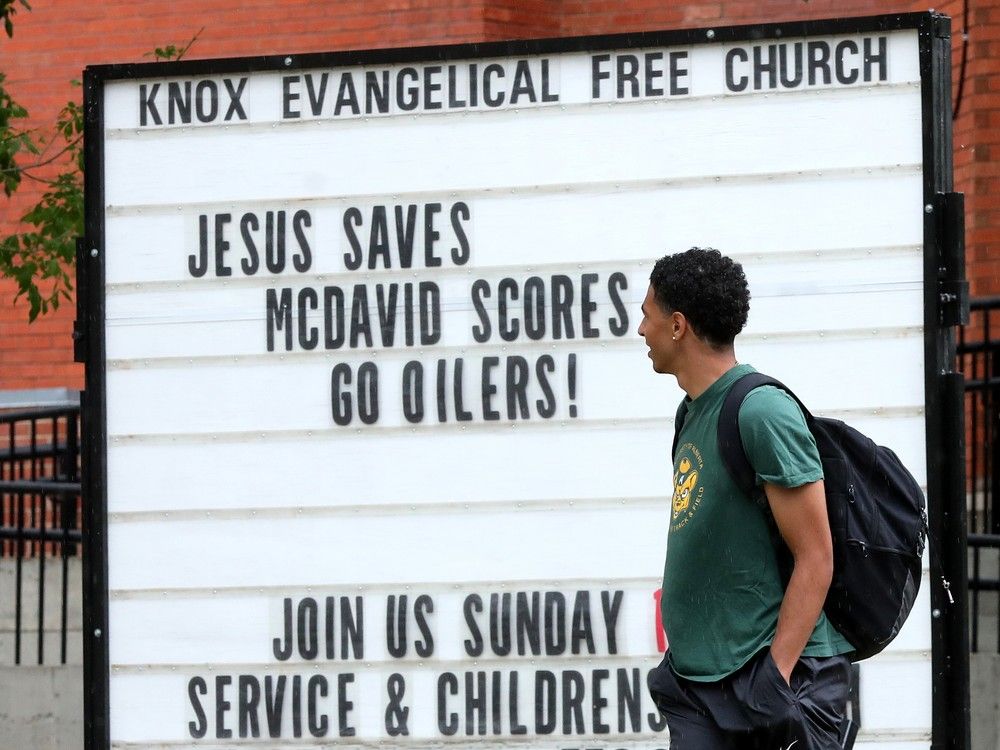
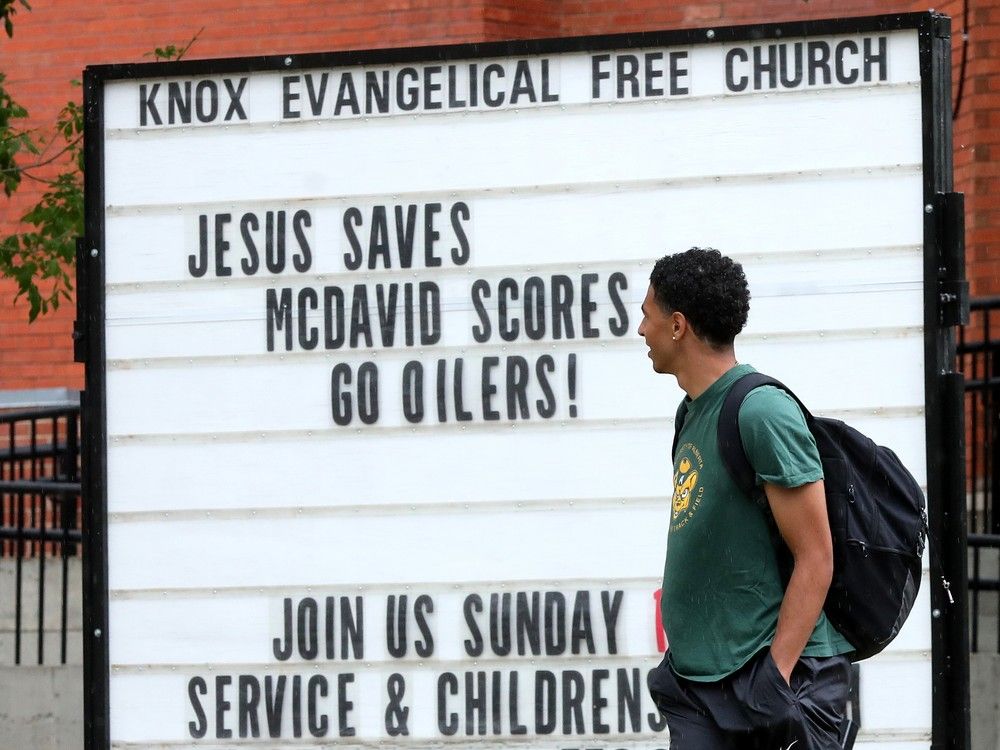
It used to be the churches, mosques, synagogues and temples were on the lookout for converts.
Now, many of them are looking to be converted.
There’s a perfect storm happening right now. Attendance at faith institutions is dwindling. In many areas, these places of worship get preferred tax status, or don’t pay property tax at all. Still, because of shrinking attendances and fundraising efforts, many of the building are falling into disrepair. Surrounding parking lots are empty.
Meanwhile, cities like Edmonton are looking for places where dense, urban affordable housing can be offered. But the move to fast-track infill projects in mature neighbourhoods has been met with opposition. City council placed some architectural controls on infill over the summer, but, after a week-long debate, a proposal on capping mid-block infill at six units per project was
.
So, here’s a thought. What if the churches could become not only places for affordable housing, but hubs for community groups? What if cities reimagined what places of worship could be? As congregations age out and faith buildings burn through financial reserves, it’s not a rhetorical question — the loss of faith buildings is a cold-hard reality that Canadian cities have to address, quickly.
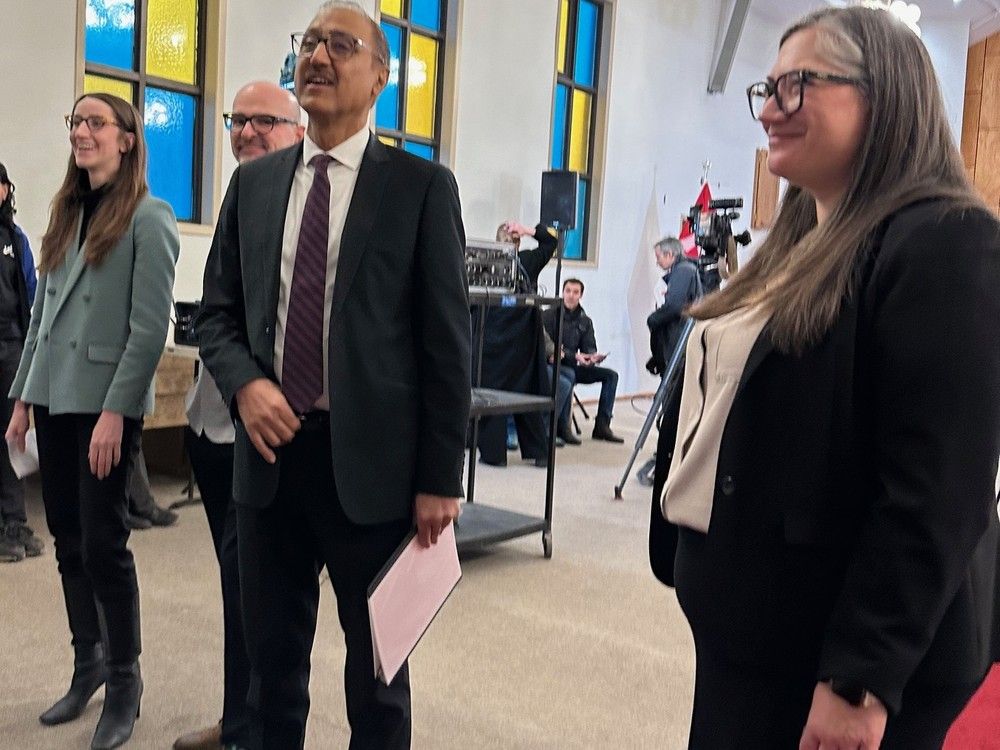
That’s what was on the table at a symposium held Tuesday in Edmonton by Releven, a nation-wide charity that looks to repurpose under-used faith buildings.
“Faith communities are the second largest landholders in Canada,” said Mike Wood Daly, Releven’s director of research. “The goal of our foundation is to keep these lands public, to keep them charitable.”
Wood Daly pointed to a study of 476 Edmonton faith buildings, which found that 144 of them were running in deficit positions.
The easy way out for a struggling church or temple is to sell to a developer who will raze the old building and put something new up. But Releven wants to see these sacred lands become home to various types of affordable housing, and become places where community groups gather. As they were gathering information, they found a church in St. Boniface, Man., that is home to a large Vietnamese population, and they hold night markets on the site. It’s this kind of community engagement that is needed if cities are to successfully reimagine the futures of their faith buildings.
“We need cities to see them as assets rather than relics in society,” said Wood Daly.
Billions worth of impact could be lost
And here’s another reason to see faith buildings be reimagined rather than sold off to developers. Wood Daly said that each year these 27,000 buildings account for $18 billion worth of charitable economic benefit, from taking in the homeless to church league basketball to hosting charities in their basements.
If one-third of those congregations disappear, there is $6 billion worth of charitable impact that will need to shift elsewhere. Churches offer space to community groups at rates that are well below market value, and they offer important community services at low cost because so much of their work is done by volunteers. Take those spaces away, and the price tags associated with those services will go up. Cities like Edmonton are already maxed out on their budgets. Who will make up the gap?
Tuesday’s Releven conference was sponsored by the Canada Mortgage and Housing Corporation (CMHC). It’s the fourth such conference held so far in Canada. Wood Daly said he’s been impressed so far at how much support Releven is receiving from both civic and provincial governments. He said Alberta’s population boom has put so much pressure on housing that they have willing partners at the different levels of government.
The thing is to convince aging congregations who don’t welcome change.
“Some are still hanging on for young people to come back,” said Dave Harder, Releven’s director of placemaking. “They haven’t yet owned our new faith-based reality.”
Harder argues that many congregations aren’t meeting the goals that have been set out for them — to be active partners in the community. If a building is only open for five per cent of the week, with a shrinking number of attendees, can that place truly be called a community hub? Or is it a landmark or, at best, a tourist attraction?
In Montreal, St. Jax was once an Anglican Church, but was reimagined as a community hub. Yes, the congregations still meets there on Sundays, but it’s used by four other congregations as well. Twelve community groups use the space. It has become a hub for arts groups. It’s used seven days a week.
In its mission statement, it says: “Whether you are partying on a Saturday night with Red Bull, worshipping on Sunday during church gathering or dancing in a mid-week fitness class, Centre St. Jax is a place where we hope you will experience the joy of feeling at home in a unique historical venue.”
In Regina, St. Matthew Anglican Church was in such a state of disrepair that it was abandoned and deemed unsafe for human habitation.
“That’s what happens when it gets ignored,” said Harder.
But Regina’s council made a progressive move — it removed St. Matthew’s historic designation, which allowed for redevelopment of the site, and it will be home to supportive housing for Indigenous residents. Harder said that by reimagining the space, a church was transformed into a site of real reconciliatory action.
Edmonton’s successful converts
And Edmonton already has seen what can be done when a congregation makes some hard decisions. St. Paul’s Lutheran Church in King Edward Park teamed with Right at Home Housing Society to create 11 housing units — including two for disabled residents — and a community space.
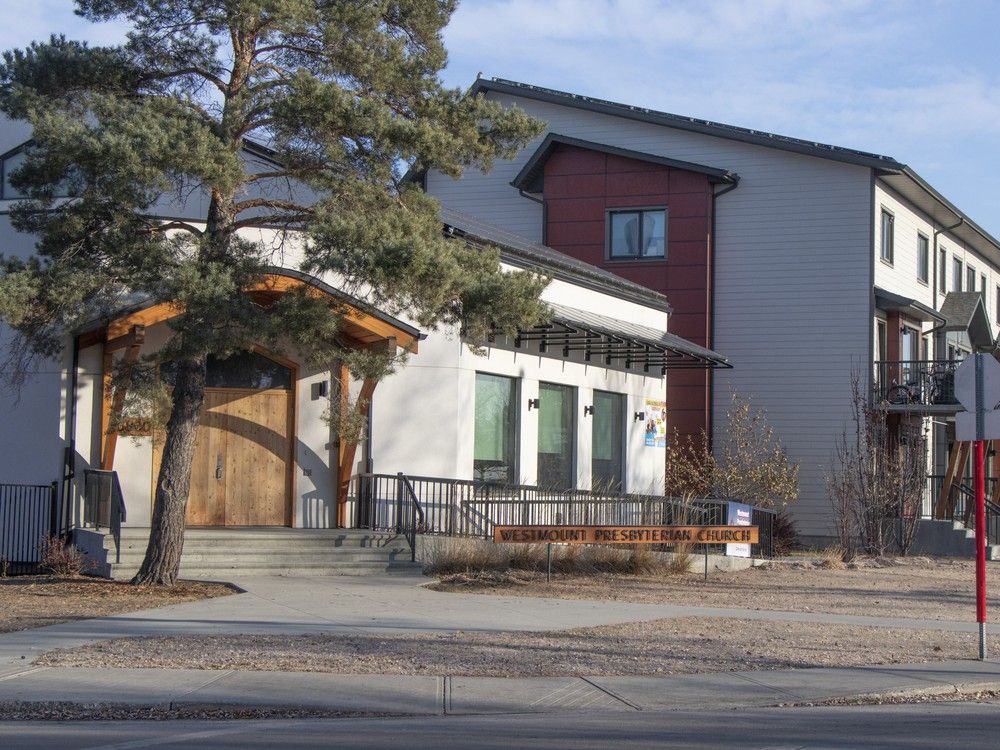
In 2017, a partnership between the Westmount Presbyterian Church and Right at Home led to the construction of 16 townhouses in North Glenora for newcomer families. It came out of the reality that the original church building was in disrepair. The roof needed to be replaced.
“It was a small congregation that had a kerfuffle, and they felt very lost,” said Rev. Annabelle Wallace.
The building actually needed seven furnaces in order to be properly heated. None of this was feasible. So, the decision was made to not only rebuild the church but to add housing to the site. And, architect Peter Amerongen incorporated two historic arches from the old building into the new, energy-efficient church. That link to history was important.
The North Glenora example — a demolition and a rebuild — is an extreme solution.
Devin Tu is with Affordable360, a group that’s designed a platform to make it easier for churches to do their due diligence in order to see if they can be redeveloped. He said that there is a lot of potential for churches in downtown cores of cities across Canada. But, of the congregations who have come forward so far, the majority don’t want to tear down their faith buildings. They don’t want a rebuild like Westmount Presbyterian. They are looking to use parking lots or their grounds for additional buildings.
‘Listen to the land’
And Harder said this isn’t just about churches. Under-used Legion Halls could also become home to affordable housing. And, community-league hubs generally have halls, playgrounds, basketball courts and maybe even outdoor rinks. Why not add housing to that footprint, with the amenities that are already there? In a housing crisis, we have to be creative in thinking where front doors can be placed.
“We have to listen to the land,” said Harder.
Tai Ziola, a partner and architect with DIALOG in Edmonton, said faith sites can be salves for residents who oppose densifying infill in their communities over fears of congestion and parking.
“For sometimes decades, they have had hundreds of people congregating at this site, and they all found places to park.” Ziola said.
These places were always meant to be high-density gathering places, so a conversion would be a lot easier on the community than a new eight-plex that replaces a single-family home.
But even with affordable housing, big bucks are needed to take the project from the planning stages to a developed housing complex. Sandie Price, a specialist in knowledge transfer and innovation programs at CMHC, said there are “hundreds and hundreds of solutions” available when it comes to financing, from community bonds to bridge financing.
Financiers are working with faith-based organizations to look at how to best leverage their lands and resources. And, in some cases, where faith becomes an obstacle to traditional financing — in Sharia law, the charging of interest is verboten — alternate measures have been created. What if tithes to a church were tied to rent? Would that create an ethical path?
What CMHC looks for is land that’s serviced, and close to amenities and transit. And the use of artificial intelligence in pre-approval processes and design will greatly lower costs. Basically, this is the time for faith-based property owners to take their own leaps of faith.
“Faith-based development is pretty sexy right now,” said Price.
Can we hear an “amen?”
Related
Bookmark our website and support our journalism:
Don’t miss the news you need to know — add EdmontonJournal.com and EdmontonSun.com to your bookmarks and sign up for our newsletters here.
You can also support our journalism by becoming a digital subscriber. Subscribers gain unlimited access to The Edmonton Journal, Edmonton Sun, National Post and 13 other Canadian news sites. Support us by subscribing today: The Edmonton Journal | The Edmonton Sun.
Search Articles
Recent Posts
Stay Updated
Get the latest articles delivered to your inbox.