‘A great day for Alberta’: Smith, Carney sign memorandum of understanding on West Coast pipeline
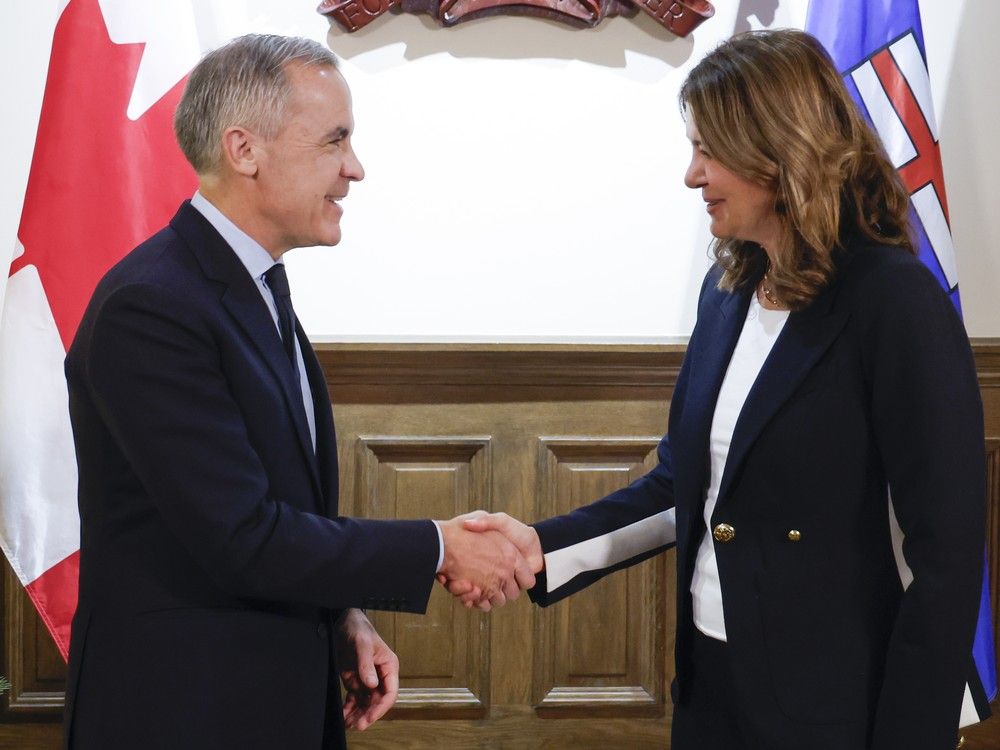
Alberta Premier Danielle Smith and Prime Minister Mark Carney have signed a deal putting in motion a plan to develop a new privately-funded oil pipeline through northern B.C. and address most of the federal environmental laws the province has taken issue with in recent years.
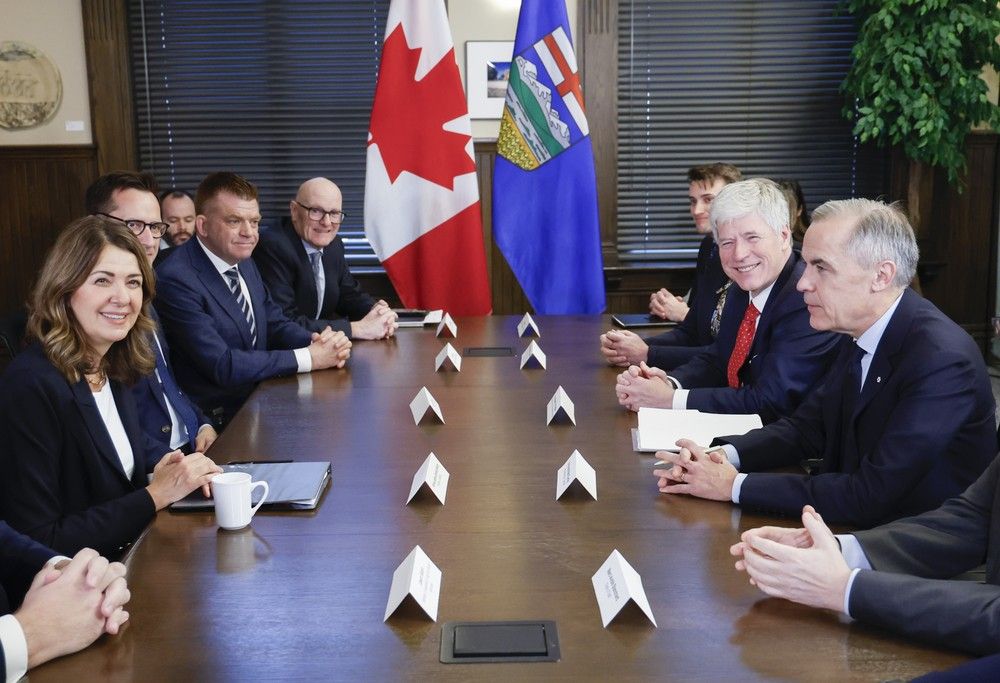
The two leaders announced the deal at a Thursday morning signing ceremony in Calgary.
The memorandum sets out how the governments will work to build the new bitumen pipeline, which Ottawa describes as a project of national interest and will be capable of carrying one million barrels per day to Asian markets.
It also calls for similar collaboration on the construction of the Pathways Plus carbon capture and storage project in northern Alberta, which Carney has described as a necessary precondition for any future oil pipeline and is scheduled to begin operations between 2027 and 2040.
The memorandum also mandates a reduction in Alberta’s methane emissions by 75 per cent from 2014 levels over the next decade.
“There is much hard work ahead of us, but today is a new starting point for nation building as we increase our energy production for the benefit of millions and forge a new relationship between Alberta and the federal government,” Smith said in a news release.
Following a formal proposal from Alberta, the federal government’s Calgary-based major projects office would work to assist the financing and construction of the new pipeline, which both governments say will be at least partly owned by Indigenous groups. That application must be received on or before Canada Day next year.
The federal government estimates the project will boost Canada’s gross domestic product by more than $16 billion and create more than 40,000 jobs annually.
“We will make Canada an energy superpower, drive down our emissions and diversify our export markets. We want to build big things, and we’re building bigger and faster together,” Carney said in a news release ahead of Thursday’s announcement.
Speaking to reporters later, he described it as “a great day for Alberta” and for the country.
“That’s going to make Canada stronger, more independent, more resilient, more sustainable,” he said of the planned pipeline.
“It’ll mean that Alberta barrels are amongst the lowest energy intensive in the world, and therefore competitive, not just for tomorrow, but for decades, as well as creating a whole new industry for Alberta and for Canada.”
The memorandum does not include a route for such a pipeline, though the Alberta government last month announced it was leading a technical advisory group to conduct planning, front-end engineering and design work.
‘Bad laws’ addressed
The agreement also addresses the majority of the federal environmental rules that Smith has in the past characterized as “bad laws.”
Those include the federal emissions cap, which will now not be implemented, as well as Ottawa’s clean electricity regulations, which are to be immediately suspended, pending the negotiation of the new carbon pricing system, which would include the electricity sector.
The agreement calls for what federal documents describe as an “appropriate adjustment” to the West Coast tanker ban, if necessary, and also eliminates some of the “greenwashing” provisions in the Competition Act, as announced in the federal budget earlier this month.
“It’s going to unleash an incredible amount of investment and allow us to work together on important nation-building projects,” Smith said of the changes, which she said addressed seven of the nine laws.
“This is the first step, I think, of what will be a few more steps we have to take together but I’m very pleased that the prime minister has heard our concerns and responded to them.”
In a separate news release, both Smith and Carney stated they are committed to achieving net-zero emissions by 2050, including an agreement to establish a new industrial carbon pricing regime through Alberta’s existing system that would set a minimum price of $130 per tonne, up from $95 per tonne, to be negotiated by April 1 of next year.
The deal also calls for more electricity transmission interties with neighbouring provinces, as well as planning for further green energy projects, including nuclear power, to provide energy for artificial intelligence data centres.
Alberta Official Opposition Leader Naheed Nenshi told reporters inside the legislature Thursday that he welcomed the MOU and pointed to his party’s role in building the Trans Mountain pipeline.
“Alberta’s New Democrats know what it takes to get a pipeline built. We’ve done it before. This deal is the first step. It’s necessary, but it’s not sufficient, and we have a lot of work left to do,” he said.
“It doesn’t magically create a pipeline. It merely creates the conditions by which someday a pipeline might occur.”
It’s time to diversify our export markets and transform our economy from one that is reliant on a single trade partner, to one that is stronger, more competitive, and more independent.
That’s the mission Premier @ABDanielleSmith and I just committed to advancing, together. pic.twitter.com/oghYgdmAu0— Mark Carney (@MarkJCarney) November 27, 2025
B.C. governing party, First Nations remain opposed
The deal also calls for engagement with the B.C. government and area First Nations, though both have spoken out against any potential pipeline project.
B.C. Premier David Eby has noted the project continues to lack a private-sector proponent, would require significant public investment and also suggested it would be easier to use the outstanding capacity of the existing Trans Mountain pipeline.
His B.C. New Democratic Party
to members earlier Thursday that read in part, “we’re not going to jeopardize our coast for Danielle Smith’s pipe dream. Real B.C. jobs and prosperity will be put at risk.”
Smith said she believes the changes would give energy companies greater certainty to invest in any future projects.
“We’ll know in the coming weeks and months,” she said. “I’m pretty confident, with the people we have at the table, that one or a consortium of them, once we establish that it is on the major projects list, will be willing to take this on.”
Carney said the absence of a private proponent would jeopardize the project, and also reiterated the need for a “full partnership” with First Nations and British Columbians.
Following Thursday’s announcement, B.C. Coastal First Nations vowed to continue fighting the plans for a pipeline, stating even one spill could destroy their way of life.
“There is no technology that can clean up an oil spill at sea or in a salmon river, and there is nothing in this MOU that overrides our inherent constitutional authority,” Marilyn Slett, elected chief of the Heiltsuk Nation, stated in a news release.
“We have zero interest in co-ownership or economic benefits of a project that has the potential to destroy our way of life and everything we have built on the coast.”
Related
Search Articles
Recent Posts
Stay Updated
Get the latest articles delivered to your inbox.